
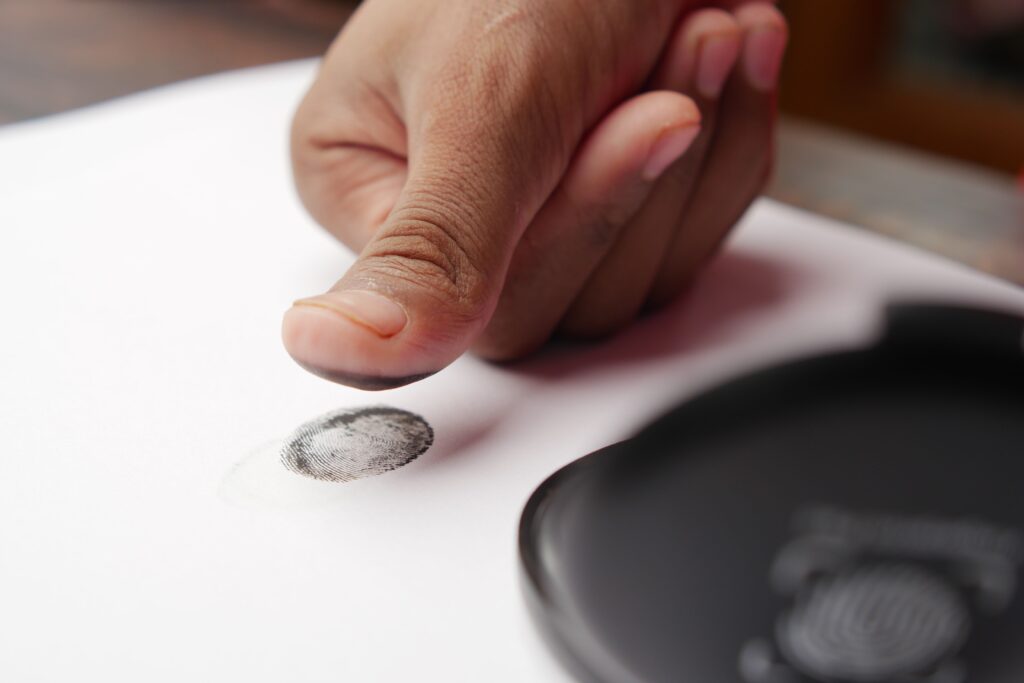
Biometric authentication – let me explain. A dear friend called me over the weekend. She relayed a story about a grieving widow who wasn’t able to access her late husband’s accounts due to his use of biometric authentication.
She went on to explain that a computer person took the late husband’s devices to the funeral home to unlock them. This real story demonstrates one of the pitfalls of using biometric authentication.
I decided to dig deeper to better understand the potential issues with biometric authentication for you today.
Photo by Vintage Laka : https://www.pexels.com/photo/eye-black-and-white-28295067/
What is it and Where Did it Come From?
Biometric authentication verifies identity using unique physical or behavioral traits like fingerprints, face geometry, voice patterns, or iris scans. It is commonly used on smartphones, laptops, and secure facilities as a convenient and secure alternative to passwords.
The need for stronger security measures has fueled the widespread adoption of biometrics. Traditional methods are increasingly falling short in the face of sophisticated cyberattacks. In response, tech giants like Apple, with their Face ID and Touch ID, have made biometrics a mainstream feature, setting a new standard for consumer devices.
This shift has been a game-changer for security, but it’s also opened a Pandora’s box of new challenges. As we integrate biometrics into every facet of our lives, from banking apps to airport security, we must ask ourselves: are we trading one set of risks for another, potentially more dangerous one?
What About Privacy?
TeamPassword wrote a blog this week that addresses biometrics. Privacy concerns were high on their list of concerns.
Your biometric data is the most personal information you have. Unlike a password, you can’t change your fingerprint or your iris. Once it’s compromised, it’s compromised forever. This raises serious questions about how this data is collected, stored, and used.
- Who has access to your data? When you use a biometric system, you’re entrusting a company with your most sensitive information. What happens if that company is sold, changes its privacy policy, or is compelled by the government to share your data?
- The risk of surveillance: The potential for biometric data to be used for surveillance is a major concern. Governments and corporations could use this information to track your movements and activities without your knowledge or consent, creating a “Big Brother” scenario that infringes on your civil liberties.
Data Security
While it’s more difficult to steal a fingerprint than a password, it’s not impossible. Hackers are constantly developing new ways to spoof biometric systems, and the consequences of a breach can be devastating.
In 2019, a massive breach at Suprema, a biometric security company, exposed the fingerprints and facial recognition data of over a million people. This incident, along with the 2015 breach of the U.S. Office of Personnel Management that exposed the fingerprint data of 5.6 million federal employees, serves as a stark reminder that no system is truly unhackable.
Inaccuracy and Bias
Biometric systems are not perfect. They can, and do, make mistakes.
- False Positives: This is when the system incorrectly identifies an unauthorized person as an authorized one. This could have serious security implications, granting access to sensitive information or restricted areas to the wrong people.
- False Negatives: This is when the system fails to recognize an authorized user. This can be a frustrating and inconvenient experience, locking you out of your own devices or accounts.
Furthermore, studies have shown that facial recognition technology has a higher error rate when identifying people of color and women, reflecting a bias in the data used to train these systems. This can lead to wrongful accusations and other serious consequences.
Lack of Standardization
There is currently no industry-wide standard for biometric authentication. This means that the quality and security of biometric systems can vary widely from one device or platform to another. This lack of standardization creates a fragmented and less secure ecosystem, making it more difficult to protect your data across all your devices.
Ethical and Legal Gray Areas
The use of biometrics raises some ethical and legal questions that have yet to be fully addressed.
- Consent: Can you truly consent to giving up your biometric data if it’s a condition of employment or a requirement for accessing essential services?
- Ownership: Who owns your biometric data? Do you have the right to have it deleted?
The 2020 lawsuit against Clearview AI, a company that built a facial recognition database by scraping billions of images from social media without users’ consent, highlights the urgent need for a clear legal framework to regulate the use of biometrics.
Accessibility Challenges
Biometric authentication can be a challenge for people with certain disabilities. For example, a person with a physical disability that affects their fingerprints may not be able to use a fingerprint scanner. Similarly, age-related changes, such as the loss of fingerprint definition, can also make it difficult for older adults to use these systems.
Implementation Expense
Implementing and maintaining a secure biometric system can be expensive. The cost of high-quality sensors, software, and secure storage can be prohibitive for smaller organizations, limiting the widespread adoption of this technology.
Photo by Towfiqu barbhuiya: https://www.pexels.com/photo/a-person-putting-a-fingerprint-on-a-white-paper-12375509/
What’s Next?
Biometric authentication is here to stay. It offers a powerful combination of security and convenience that is hard to resist. However, it’s clear that we need to approach this technology with caution.
To realize the full potential of biometrics while mitigating its risks, we need to strike a delicate balance between security and privacy. This includes:
- Adopting stringent legal frameworks to protect users’ privacy and give them more control over their data.
- Investing in robust security measures to safeguard biometric data from breaches.
- Ensuring that the technology is inclusive and accessible to all users.
Protect Yourself
It’s a personal decision whether or not to use biometric authentication. Check out the privacy and data-sharing policies if you use it.
Stay informed: Keep up to date on the latest news and developments in biometric security so you can make informed decisions about how and when to use this technology. Be aware of the risks and create a backup system for accessing accounts, just in case.
After years of hearing how people are caught off guard by the level of detail required by 3rd parties during and after a health event or natural disaster, now is a good time to work together to collate and organize your life’s details.
I’d like to invite you to test the concept with me. If you’re ready to dig in, sign up to meet on Zoom for one hour on Wednesday, September 16th at 9 am Pacific Time. If you’re interested, sign up HERE. If you have personal questions, we’ll pop into a breakout room for your privacy.
If you have questions, please feel free to Email me. If you’d like to learn more about my work, check out my website @ The Living Planner. Let me know if there are topics of interest to you for my weekly blog. It’s always good to hear from you.
I’ve written my book for people who would like to consider planning for now and after a loss. The 2026 edition of Living Planner What to Prepare Now While You Are Living © can be purchased HERE.
Quote of the week: “When we seek to discover the best in others, we somehow bring out the best in ourselves.” William Arthur Ward
Fall preparation time is here! Lynn
#Can’tPredictCanPrepare #CareForPeopleCareForBusiness