
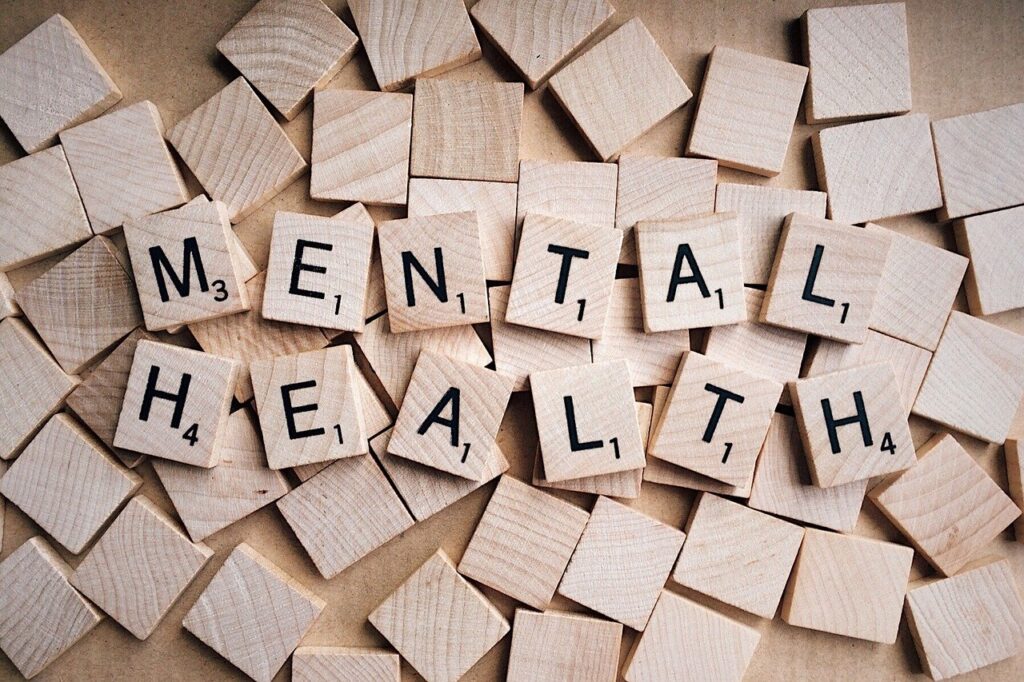
As May is Mental Health Awareness Month, let’s close out the month with information about mental health. Mental illnesses are prevalent in the U.S. and globally.
The National Institutes of Health (NIH) reported that over one in five U.S. adults, approximately 59.3 million adults, or 23.1% of the adult population, were living with a mental illness. The severity of a mental illness can vary from person to person. Some individuals can perform daily tasks, including work, with mental illness, and some people may qualify for disability due to their mental illness.
It may be helpful to note the difference between mental health and mental illness. Mental health is how a person functions in daily activities, and mental illness is the collective term for all diagnosable mental disorders.

Image by WOKANDAPIX from Pixabay
Help for Mental Illness
The National Institute of Health (NIH) has a resource page on its website that you can access.
Where Can I Get Immediate Help?
In life-threatening situations, call 911 or go to the nearest emergency room.
If you are suicidal or in emotional distress, consider using the 988 Suicide & Crisis Lifeline. Call or text 988 or start a chat online to connect with a trained crisis counselor. The Lifeline provides 24-hour, confidential support to anyone in suicidal crisis or emotional distress. Learn more: 988 Suicide & Crisis Lifeline (988 Línea de Prevención del Suicidio y Crisis en español )
If you are a veteran, consider using the Veterans Crisis Line. Call 988, then press “1.” You can also text 838255 or chat online . The Veterans Crisis Line is a 24-hour, confidential resource that connects veterans with a trained responder. The service is available to all veterans and those who support them, even if they are not registered with the VA or enrolled in VA healthcare. Learn more: Veterans Crisis Line (Línea para Veteranos en Crisis en español )
If you have experienced a disaster, consider using the Disaster Distress Helpline. Call or text 1-800-985-5990. The Disaster Distress Helpline provides immediate crisis counseling for people experiencing emotional distress related to any natural or human-caused disaster. The 24-hour, confidential helpline offers interpretation services in more than 100 languages. Learn more: Disaster Distress Helpline (Línea de Ayuda para los Afectados por Catástrofes en español )
If you see concerning social media messages, contact the company’s safety team. Social media companies have safety teams that can reach out to connect the person with the help they need. Learn more about action steps to help someone having thoughts of suicide.
How Can I Find a Health Care Provider or Treatment?
Treatment for mental illnesses usually includes therapy (virtual or in person), medication, or a combination of the two. There are many ways to find a provider who will meet your needs.
Primary care provider: A primary care provider can perform an initial mental health screening and refer you to a mental health professional (such as a social worker, psychologist, or psychiatrist). If you have an appointment with a primary care provider, consider bringing up your mental health concerns and asking for help.
Federal resources: Some federal agencies offer resources for identifying mental health professionals. These include:
- Substance Abuse and Mental Health Services Administration (SAMHSA) helpline and online locator for mental health services
- Centers for Medicare & Medicaid Services (CMS) online tool for finding Medicare providers
- U.S. Department of Veterans Affairs (VA) online tool for finding VA locations and providers
National organizations: Many advocacy and professional organizations have online tools for finding a provider. View a list of organizations that offer directories or locators for finding mental health professionals.
State and county agencies: Your state or county government website may have information about health services in your area. Your local health services department website is a good place to start.
Insurance companies: If you have health insurance, a representative of your insurance company will know which local providers are covered by your insurance plan. Your health insurance company may have an app or online database that you can use to find a participating provider in your area.
Universities and colleges: If you’re a student, you may have access to mental health services and support through your school’s health center or peer support groups. Try searching your school’s website for mental health resources.
Employee assistance: If you have a job, ask your employer’s human resources department if they have an Employee Assistance Program (EAP). An EAP is a free and confidential service that your company pays for. The service can help employees with issues related to mental health, drug or alcohol use, grief, and trauma.
NAMI.org
Join a Study
Clinical trials are research studies that look at new ways to prevent, detect, or treat diseases and conditions. The goal of clinical trials is to determine if a new test or treatment works and is safe. Although individuals may benefit from being part of a clinical trial, participants should be aware that the primary purpose of a clinical trial is to gain new scientific knowledge so that others may be better helped in the future.
Researchers at NIMH and around the country conduct many studies with patients and healthy volunteers. We have new and better treatment options today because of what clinical trials uncovered years ago. Be part of tomorrow’s medical breakthroughs. Talk to your health care provider about clinical trials, their benefits and risks, and whether one is right for you.
To learn more or find a study, visit:
Clinicaltrials.gov: Current Studies on Coping with Trauma: List of clinical trials funded by the National Institutes of Health (NIH) being conducted across the country
NIMH’s Clinical Trials webpage: Information about participating in clinical trials. NIMH offers research-based information on mental disorders, treatments and therapies, and a range of related topics. To learn more, browse our health topic pages, brochures, and fact sheets. También ofrecemos recursos del NIMH en español.
Please note: NIMH is a research funding agency. They cannot provide medical advice or provider referrals. If you need medical advice or a second opinion, please consult your health care provider. Resources on this page are provided for informational purposes only. The list is not comprehensive and does not constitute an endorsement by NIMH.
NAMI
NAMI is the National Alliance on Mental Illness. We are the nation’s largest grassroots mental health organization. This Alliance includes more than 650 NAMI State Organizations and Affiliates who work in your community to raise awareness and provide support and education to those in need. To see resources in your area, go to their website.
Memorial Day
Memorial Day was originally known as Decoration Day. This holiday honors those who gave their lives while in service to our country. During this long weekend, pause to remember that many gave their lives for our freedom while serving.
Care for You
Summer is unofficially here! Be sure you incorporate time and activities that you enjoy! I can highly recommend tossing “busy” and going for a device and activity detox! Slowing down for a bit always helps me speed up!
If you’d like help planning or talk through your specifics, please click Book a Time with Lynn for a complimentary 30-minute Zoom with me. OR, send me a note via Email. Check out what I offer @ The Living Planner.
Summer is a great time to read! For pre-planners, my book is an easy read with short chapters that highlight specific topics to help you prepare. The 2026 edition of Living Planner What to Prepare Now While You Are Living © has been printed! Check it out HERE.
Quote of the week: “Summer afternoon—summer afternoon; to me those have always been the two most beautiful words in the English language.” — Henry James
Summer fun is good fun, enjoy! Lynn
#Can’tPredictCanPrepare #CareForPeopleCareForBusiness