
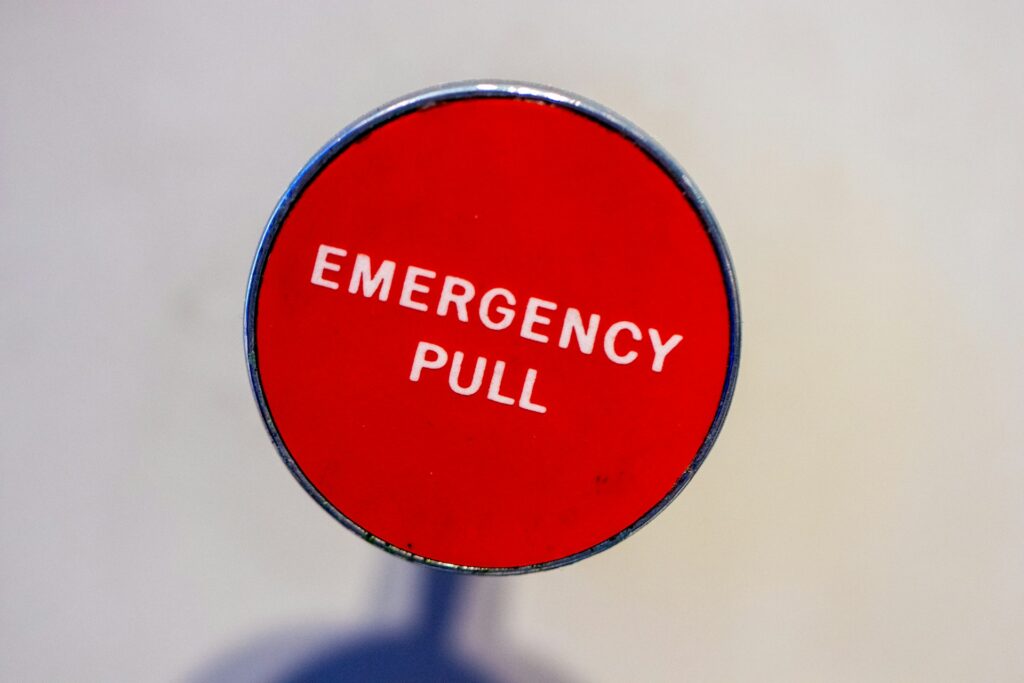
Each September, National Preparedness Month encourages Americans to be ready for disasters or emergencies at home, work, and in their communities. I’ve written extensively about this over the years. Let’s look at practical preparedness through the lens of 2026 to get you thinking.
In 2026, the most common disasters in different regions of the U.S. include hurricanes in the Southeast and East Coast, tornadoes in the Midwest and South, and wildfires throughout the West. Additionally, winter storms can occur across various regions.
Earthquake probability is increasing across the United States. Earthquakes are a concern in California, the Pacific Northwest, and the Central Region of the USA, and a good source to read more can be found HERE.
Photo by Jason Leung on Unsplash
Your Local Community
Understanding the risks you face in your local community is your first step. Identify the types of disasters that are most likely to occur in your area, such as hurricanes, floods, wildfires, extreme heat and cold, winter storms, earthquakes+.
Research local emergency management resources to stay informed about specific risks and preparedness measures. Sign up for emergency alerts from local authorities to receive timely information about disasters.
Learn about local emergency information and alerts in the US from your local government websites and emergency management agencies. National information can be found on the FEMA, Ready.Gov, Smart911, and the National Weather Service websites.
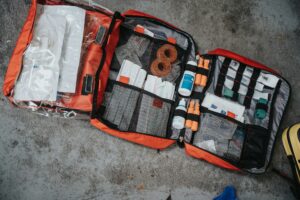
Photo by Mathurin NAPOLY / matnapo on Unsplash
Establish a Survival Kit
Have you created a family survival kit? Consider including the following items:
| Item | Purpose |
|---|---|
| Water (1 gallon per person per day) | Hydration during emergencies |
| Non-perishable food ( and a manual can opener) | Food to last for at least three days |
| Flashlight (and extra batteries in a waterproof bag) | Visibility during power outages |
| First aid kit | Basic medical supplies for injuries |
| Battery-powered radio (and extra batteries in a waterproof bag) | Stay informed about emergency updates |
| Whistle and solar charging for your phone/tablet | Keep informed and signal for help if needed |
| Dust mask (N3 preferred) | Help filter contaminated air |
| Local maps | Navigate if GPS is unavailable |
Safeguard Important Documents
Consider the following scenarios and prepare accordingly.
- If you need to identify yourself, household members, pets, or co-workers, what’s needed?
- What’s needed to prove where you live, access cash, pay bills, and file claims?
- If medical care is needed, how can you request help?
- Emergency numbers of people you’d contact in an emergency?
- How would you prove you own what you own?
Emergency Communication and Meeting Place
Is there an established meeting place for your family and your workplace? If not, identify optional locations in case of any emergency and document instructions to share with your family and your workplace.
I like to think of it in if/then case scenarios. If X is here, what are the options? If Y is there, where do they go? Walk it through with your family and co-workers. Practice drills are very helpful. IF you have a bit of “muscle memory”, it makes it easier if you ever need to execute.
Fill out physical emergency contact cards for every family member in case cell service or internet access is down. During stressful times, remembering a bunch of phone numbers without a phone can be tough.
Selecting optional locations comes into play if your local infrastructure has been impacted. I remember a fire near me in 2007 that closed the only north/south freeway near me. Hmm, back road options became a traffic nightmare; thank heavens I had a full tank of gas!
Preparation Instills Confidence
This quote says it all, “Preparation doesn’t assure victory, it assures confidence.” – Amit Kalantri
We’re on the homestretch for 2026. The next three months have Halloween, Thanksgiving, and Christmas.
These times are time with people you love. Consider incorporating conversations about what’s important to you and what it will take to get things mapped out.
The Ready Room starts next Wednesday (the 16th). Join me, to plan and organize the admin side of life (document and work on tasks). There will be time ask questions too!
No cost, one hour, on three Wednesdays: September 16, 23, & 30 at 9 am Pacific Time. Register on Zoom TheReadyRoom.
If you’d like to learn more about my work, check out my website @ The Living Planner. Or feel free to Email me anytime. I love hearing from you!
I’ve written my book for people who would like to consider planning for now and after a loss. The 2026 edition of Living Planner What to Prepare Now While You Are Living © can be purchased HERE.
Quote of the week: “Preparation time is never wasted time.” – Anonymous
Build your confidence through preparation. Lynn
#Can’tPredictCanPrepare #CareForPeopleCareForBusiness